

What are Marine Epaulettes in Yachting?
- Authors
-
-

- Name
- Patrick Maflin
-
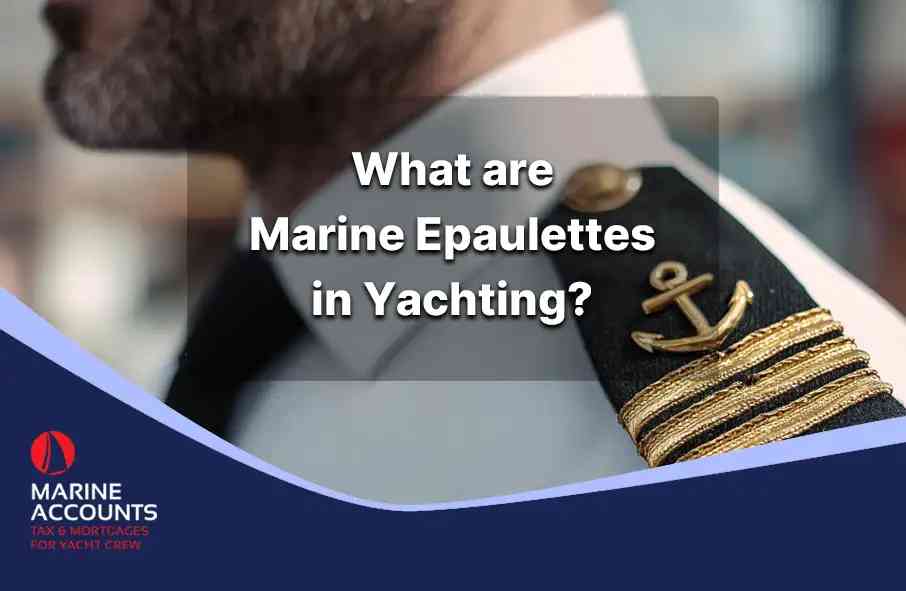
Marine epaulettes are ornamental shoulder pieces worn on the uniforms of yacht and maritime crew to signify rank, department, and level of responsibility.
They are more than just decorative symbols - they are a visual representation that allows everyone on board to instantly recognise an individual's role and authority.
Typically, epaulettes feature stripes, bars, or symbols in gold or silver on a dark background colour, with the number and style of these markings indicating the wearer’s position, from junior deckhands up to the captain.
Chapters
- Why Do Yacht Crew Wear Epaulettes?
- How Are Epaulettes Worn?
- What Do the Stripes on Epaulettes Mean?
- What Do the Symbols on Epaulettes Mean?
- The Epaulette Ranks
- Key Takeaways
Why Do Yacht Crew Wear Epaulettes?
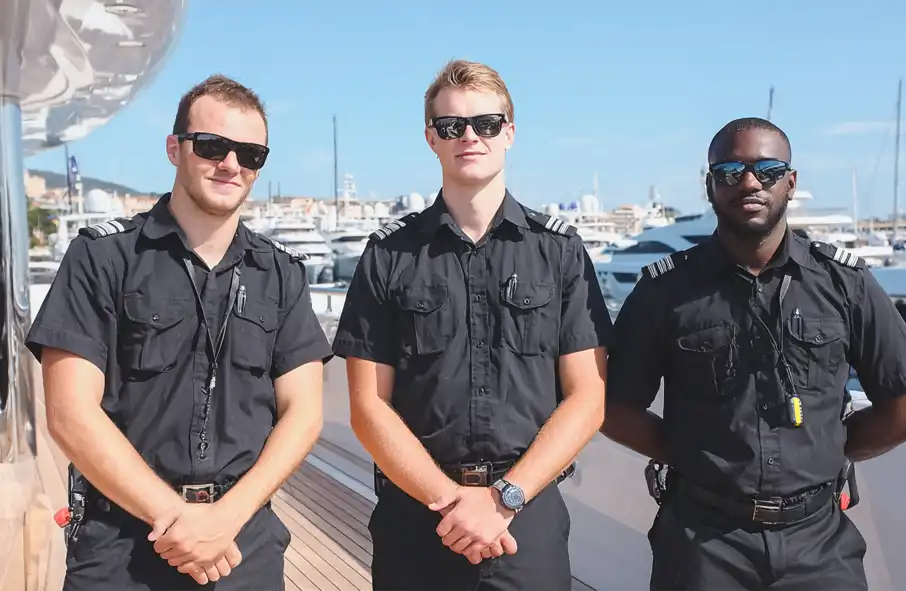
Epaulettes serve multiple purposes in the yachting industry.
Firstly, they provide a clear hierarchy, which is critical on vessels where safety and efficiency depend on everyone understanding the chain of command.
For example, in an emergency, guests and crew need to know immediately who has the authority to give orders.
Secondly, they uphold tradition.
The use of epaulettes dates back to naval history when officers needed a clear way to distinguish themselves during boarding, manoeuvres, and official ceremonies.
Finally, epaulettes convey professionalism.
Yacht crew members wearing epaulettes signals competence, training, and adherence to the standards on sea vessels.
How Are Epaulettes Worn?
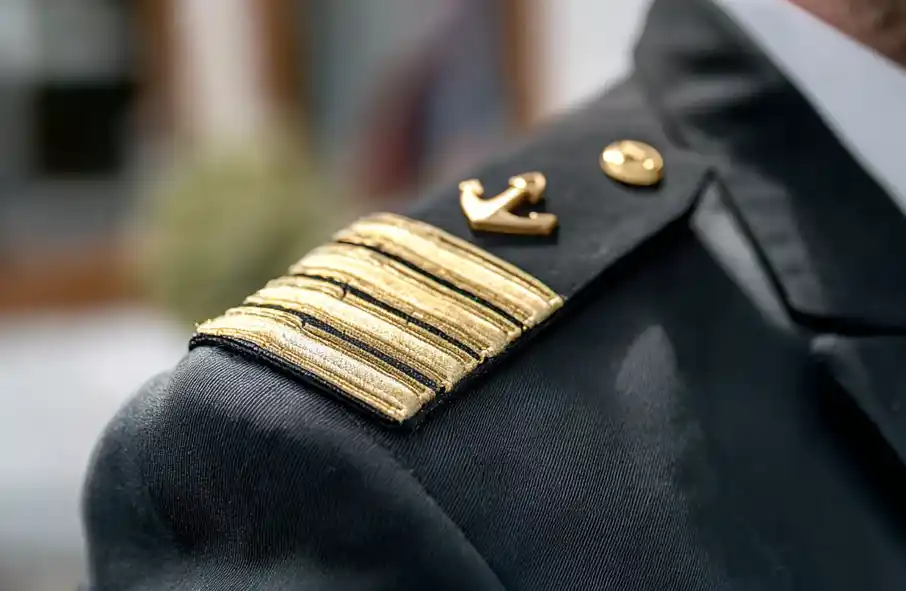
When working on a yacht, epaulettes are generally worn on the shoulders of the uniform jacket or shirt.
They are attached either with buttons, Velcro, or slides depending on the uniform design.
The epaulettes must sit flat against the shoulder, aligned with the seam of the garment, to maintain a sharp and professional appearance.
Wearing them incorrectly, such as unevenly or too loose, can undermine authority and professionalism.
This is why crew are trained in proper uniform standards during the recruitment process.
What Do the Stripes on Epaulettes Mean?
The number of stripes on an epaulette corresponds to the rank of the wearer.
The general rule of thumb is, the more stripes, the higher the rank.
Each stripe signifies a level of responsibility, authority, and experience within the crew hierarchy.
One Stripe
Typically worn by junior crew members or cadets, indicating a trainee or entry-level position.
Two Stripes
Worn by officers with some level of responsibility, such as second officers or first stewards.
Three Stripes
Represent senior officers or heads of departments, such as a chief engineer or first officer.
Four Stripes
Reserved for the captain or senior crew members, signifying the highest authority on the vessel.
The combination of stripes and additional symbols (such as anchors and propellers) further clarifies the wearer’s exact role.
What Do the Symbols on Epaulettes Mean?
Symbols on epaulettes are used to differentiate between departments.
For example, in yachting:
Anchor
Typically used for deck officers, indicating responsibility for navigation, seamanship, and vessel operation.
Propeller or Cog
Often associated with engineering staff, showing expertise in mechanical systems and propulsion.
Crossed Utensils or Chef’s Hat
Denotes culinary and kitchen staff, highlighting leadership in galley operations.
Crescent Moon
Most often designated to the hospitality team, such as stewards.
Symbols ensure that even if two crew members have the exact same number of stripes and colour, their specific role is immediately identifiable by the accompanying icon.
The Epaulette Ranks
| Position | No. of Stripes | Symbol | Stripe Colour |
| Captain | 4 | Anchor | Gold |
| Chief Engineer | 4 | Propellor | Gold |
| First Officer | 3 | Anchor | Gold |
| Head Chef | 3 | Knife & Fork | Silver |
| Purser | 3 | Quills | Silver |
| Chief Stewardess | 3 | Crescent Moon | Silver |
| First Engineer | 3 | Propellor | Gold |
| Bosun | 2 | Anchor | Gold |
| Second Steward | 2 | Crescent Moon | Silver |
| Second Engineer | 2 | Propellor | Gold |
| Second Chef | 2 | Knife & Fork | Silver |
| Deckhand | 1 | Anchor | Gold |
| Third Engineer | 1 | Propellor | Gold |
| Third Chef | 1 | Knife & Fork | Silver |
| Steward | 1 | Crescent Moon | Silver |
Below is a detailed look at common yacht positions and their associated epaulettes, along with a brief description of each role:
Captain
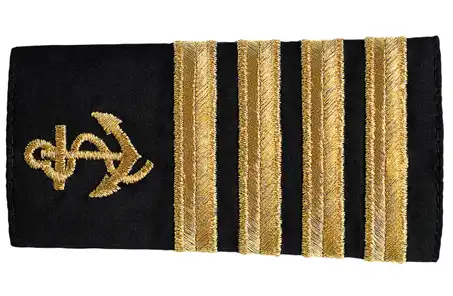
Four gold stripes, often with an anchor symbol. The captain is the ultimate authority on board, responsible for vessel safety, navigation, crew management, and guest satisfaction.
First Officer
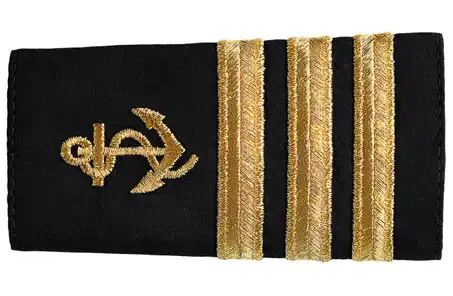
Three gold stripes, second in command. Oversees deck operations, assists the captain, manages deck crew, and ensures safety protocols.
Bosun
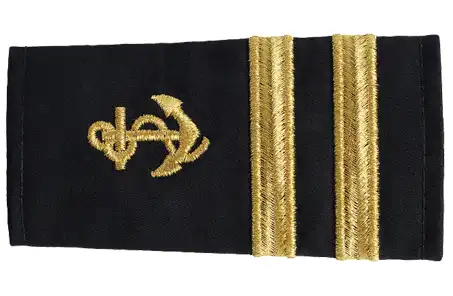
Two gold stripes. A bosun supervises deckhands, maintains equipment, and ensures smooth daily operations.
Deckhand
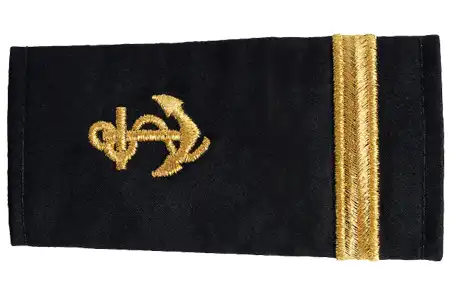
One gold stripe. A deckhand executes maintenance, cleaning, mooring, and basic operational tasks under supervision.
Chief Engineer
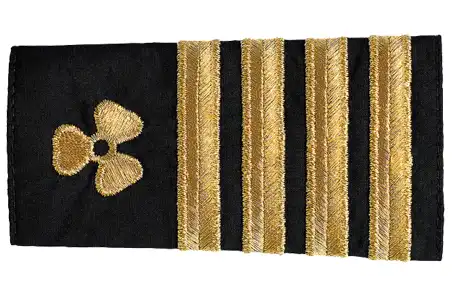
Four gold stripes. The chief engineer manages all mechanical, electrical, and technical systems to ensure they function reliably.
1st Engineer

Three gold stripes. Supports the chief engineer, monitors machinery, and handles routine maintenance.
2nd Engineer
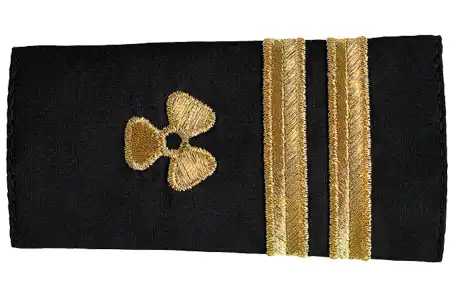
Two gold stripes. Junior engineering officer responsible for specific systems or machinery.
Head Chef
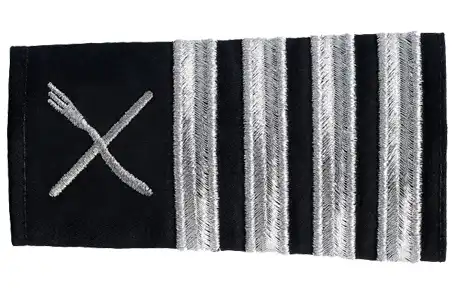
Four silver stripes. The head chef manages galley operations, menu planning, and food safety.
1st Chef / Sous Chef
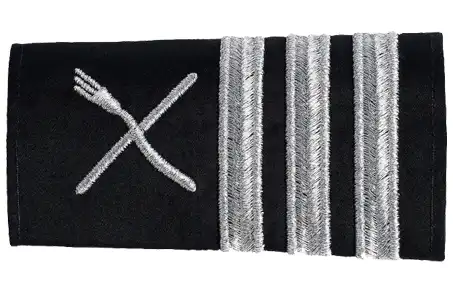
Three silver stripes. Supports head chef, supervises kitchen staff, and oversees service preparation.
2nd Chef / Demi-Chef
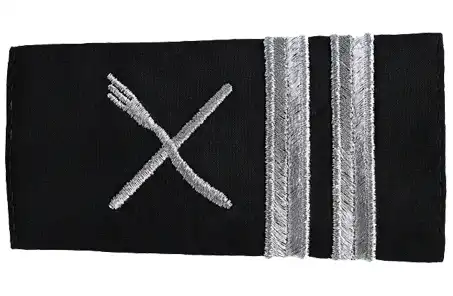
Two silver stripes. Entry-level chef, assists with cooking and prep work.
Chief Steward
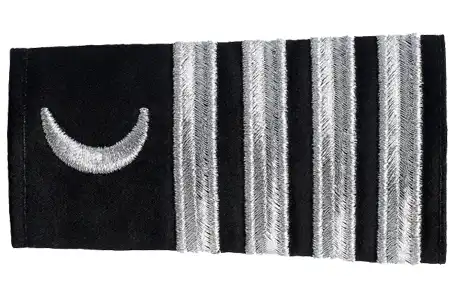
Four silver stripes. The chief steward leads interior department, responsible for guest service, housekeeping, and interior staff management.
1st Steward
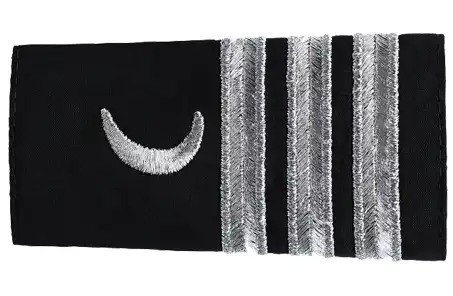
Three silver stripes. Supervises interior team members, manages service standards.
2nd Steward

Two silver stripes. Provides guest service, cleaning, and support duties.
3rd Steward
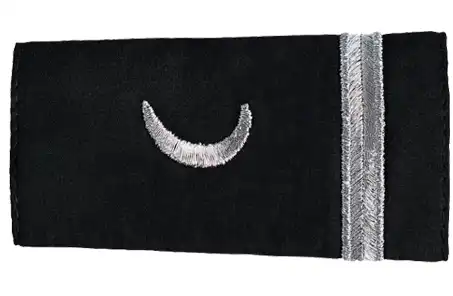
One silver stripe. Junior interior crew, assisting with general housekeeping and guest service tasks.
Each rank’s epaulette communicates authority, responsibility, and the wearer’s function on the yacht, creating clarity and organisation in both daily operations and emergency situations.
Credits: Epaulette images courtesy of Marine Pool where you can order epaulettes online.
Key Takeaways
Marine epaulettes are more than jut ceremonial attire - they are a vital hierarchical tool that maintains order, safety, and professionalism aboard a yacht.
The combination of stripes, symbols, and colours quickly identifies a crew member’s rank and department, ensuring efficient operations and a clear chain of command.
Understanding epaulettes helps new crew and guests alike navigate yacht life with confidence, respecting both tradition and operational hierarchy.
Disclaimer: Any advice in this publication is not intended or written by Marine Accounts to be used by a client or entity for the purpose of (i) avoiding penalties that may be imposed on any taxpayer or (ii) promoting, marketing or recommending to another party matters herein.