
What is an ENG 1 Medical Certificate?
- Authors
-
-

- Name
- Patrick Maflin
-
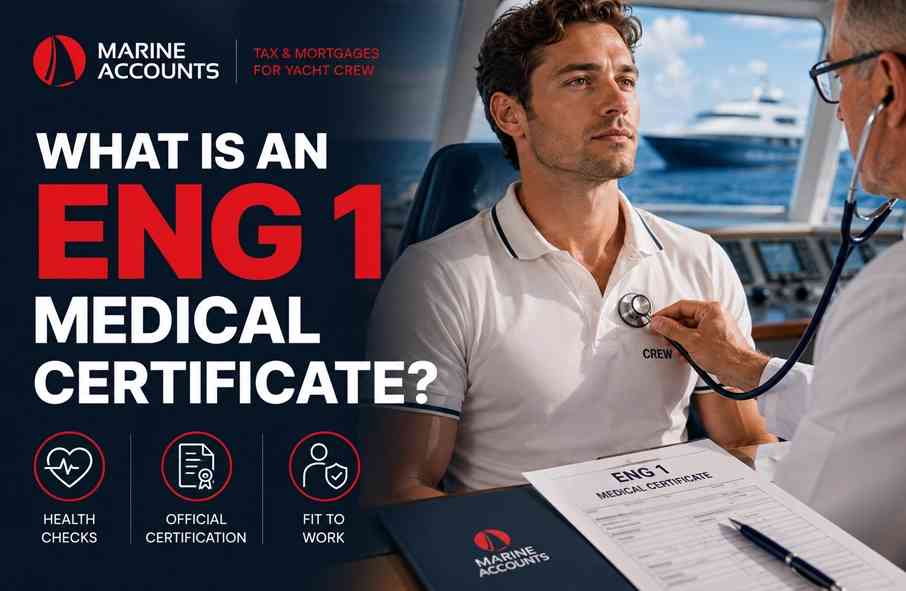
If you're planning to work at sea as a professional seafarer or yacht crew member, an ENG1 Medical Certificate is one of the first documents you'll need.
Issued by a doctor approved by the Maritime and Coastguard Agency (MCA), it confirms that you are medically fit to carry out your duties safely onboard a commercial vessel.
Whether you're preparing for your first job in the yachting industry or renewing an existing certificate, understanding what an ENG1 medical involves can help you attend your appointment with confidence.
This guide explains who needs an ENG1, what happens during the examination, how much it costs, how long it remains valid and what happens if a medical condition is identified.
Key Takeaways
- An ENG1 Medical Certificate confirms you are medically fit to work at sea.
- The examination must be carried out by an MCA-approved doctor.
- Most professional seafarers and commercial yacht crew require a valid ENG1 before joining a vessel.
- The medical assesses your overall health, eyesight, hearing and fitness for work at sea.
- Most appointments take around 30 to 45 minutes.
- A standard ENG1 Medical Certificate is normally valid for up to two years.
- The current maximum fee for an ENG1 medical is £115, although some clinics may charge less.
- Existing medical conditions do not automatically prevent you from obtaining an ENG1.
- If necessary, a certificate may be issued with restrictions or for a shorter period.
- If you are found medically unfit, you have the right to appeal the decision.
Chapters
- Why is an ENG1 Medical Certificate Required?
- Who Needs an ENG1 Medical Certificate?
- Who Doesn’t Need an ENG1?
- What Happens During an ENG1 Medical?
- What Should You Bring to Your ENG1 Medical Appointment?
- How Long Does an ENG1 Medical Take?
- How Much Does an ENG1 Medical Cost?
- Where Can You Get an ENG1 Medical?
- What Happens After the Examination?
- How Long is an ENG1 Medical Certificate Valid?
- Can You Get an ENG1 if You Have a Medical Condition?
- ENG1 vs ML5: What's the Difference?
- Frequently Asked Questions
- Is an ENG1 Medical Certificate compulsory?
- Can you fail an ENG1 medical?
- Does an ENG1 include a drugs test?
- Can I wear glasses or contact lenses during the examination?
- Can I get an ENG1 before completing my STCW training?
- Can I use an ENG1 outside the UK?
- What happens if my ENG1 expires while I'm working?
- Final Thoughts
Why is an ENG1 Medical Certificate Required?
Working at sea places unique physical and medical demands on every crew member.
Unlike many land-based jobs, professional seafarers may spend days or even weeks away from the nearest hospital, often working long hours in physically demanding environments where immediate medical treatment is not always available.
The purpose of an ENG1 Medical Certificate is to confirm that you are medically fit to perform your duties safely without placing yourself, your colleagues or the vessel at unnecessary risk.
It also helps employers meet their legal responsibilities by ensuring everyone onboard is capable of carrying out their role should an emergency arise.
Although the medical examination is thorough, its purpose is not to exclude people from working at sea unnecessarily.
Instead, it provides an independent assessment of whether you can safely undertake the duties expected of you in the maritime industry.
Who Needs an ENG1 Medical Certificate?

An ENG1 Medical Certificate is required by most people working professionally onboard commercial vessels that are subject to UK maritime regulations.
This includes individuals starting their first career at sea as well as experienced crew members renewing an existing certificate.
For anyone entering the superyacht industry, obtaining an ENG1 is often one of the very first steps before applying for jobs.
Many employers will expect candidates to hold a valid certificate before joining a yacht, alongside their STCW Basic Safety Training qualification.
Yacht Crew
If you intend to work onboard a commercially operated yacht, you will almost certainly need a valid ENG1 Medical Certificate before joining the vessel.
This applies to a wide range of onboard roles, including:
- Deckhands
- Stewardesses and stewards
- Engineers
- Chefs
- Officers
- Captains
Regardless of your position, everyone onboard contributes to the safe operation of the yacht.
The ENG1 helps confirm that you are medically capable of carrying out your duties and responding effectively during emergencies.
Merchant Seafarers
Merchant Navy personnel working aboard cargo ships, tankers, ferries, cruise ships and other commercial vessels are generally required to hold a valid ENG1 Medical Certificate throughout their employment.
Employers will usually ask to see a valid certificate before you join the vessel and again whenever it comes up for renewal.
Fishermen and Other Commercial Seafarers
Many fishermen and other commercial seafarers also require an ENG1, depending on the type of vessel they work aboard and the regulations that apply to their role.
If you are unsure whether an ENG1 is required for your particular position, it's worth checking with your employer or training provider before arranging your medical.
Who Doesn’t Need an ENG1?
Not everyone who spends time on the water requires an ENG1 Medical Certificate.
For example, recreational sailors and people operating private pleasure craft do not normally require one.
Likewise, some individuals working on smaller commercial vessels operating in specific circumstances may instead require a different type of medical certification.
One example is the ML5 Medical Report, which is accepted for certain maritime roles but is not an equivalent replacement for an ENG1 in many sectors, including the commercial yachting industry.
If your career goal is to work aboard commercial yachts or larger commercial vessels, you should generally expect an ENG1 to be the required standard.
What Happens During an ENG1 Medical?
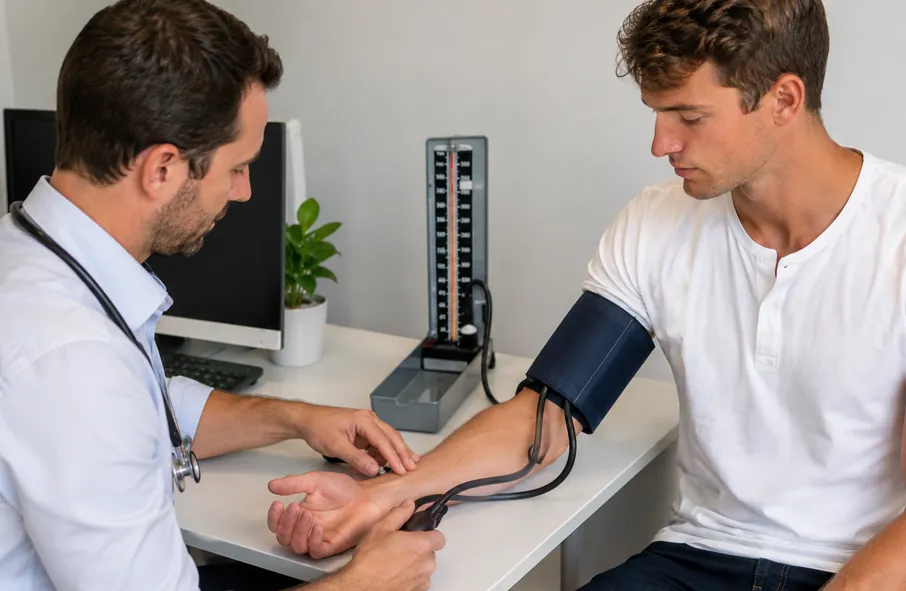
One of the biggest concerns for first-time crew members is not knowing what to expect during the examination.
Fortunately, the process is relatively straightforward and usually takes between 30 and 45 minutes.
The doctor's role is to assess whether you are medically fit to work safely at sea.
The examination follows standards set by the Maritime and Coastguard Agency and looks at your overall health rather than focusing on a single aspect of your fitness.
Although every appointment is tailored to the individual, most ENG1 medical examinations include the following checks.
Medical History
Your appointment will usually begin with a discussion about your medical history.
The doctor may ask questions about:
- Previous illnesses or operations
- Current medical conditions
- Prescription medication
- Previous injuries
- Mental health history where relevant
- Lifestyle factors that may affect your fitness for work at sea
It’s important to answer these questions honestly.
Declaring a medical condition does not automatically mean you will fail the examination.
In many cases, the doctor simply needs enough information to determine whether the condition is well controlled and compatible with working safely at sea.
Eyesight and Colour Vision
Good eyesight is essential for many maritime roles, particularly those involving navigation, lookout duties and vessel safety.
Your vision will normally be tested to assess both distance and near vision.
If you usually wear glasses or contact lenses, you should bring them with you and inform the doctor.
Colour vision may also be assessed, particularly if your intended role requires the accurate identification of navigation lights, signals or safety equipment.
The level of colour perception required varies depending on the type of work you intend to carry out.
Hearing Assessment
Being able to hear alarms, radio communications and verbal instructions is an important part of maintaining safety onboard.
The doctor will assess your hearing to ensure it meets the standards necessary for working at sea.
This is usually a straightforward assessment and, if further investigation is required, the doctor will explain the next steps.
General Physical Examination
The medical also includes a routine physical examination to assess your general health.
Depending on your individual circumstances, this may include checking:
- Blood pressure
- Pulse
- Height and weight
- Heart and lungs
- Mobility
- Balance and coordination
The doctor is looking for any condition that could affect your ability to carry out your duties safely, particularly in physically demanding or emergency situations.
Urine Test
Most ENG1 medical examinations include a urine sample.
This is not primarily intended as a drugs test.
Instead, it is used to screen for potential underlying medical conditions, such as diabetes or kidney problems, that may require further assessment before a certificate can be issued.
If the doctor identifies anything that requires additional investigation, they will explain what this means and whether any further information is needed.
Existing Medical Conditions
Many people worry that having a medical condition means they will automatically fail the ENG1.
In reality, this is rarely the case.
Conditions such as asthma, high blood pressure or diabetes do not necessarily prevent someone from working at sea.
What matters is whether the condition is stable, well managed and unlikely to compromise your safety or the safety of others while onboard.
In some cases, the doctor may ask for additional medical reports or information from your GP or specialist before making a final decision.
This is a normal part of the assessment process and should not immediately be seen as a cause for concern.
What Should You Bring to Your ENG1 Medical Appointment?
Preparing for your appointment in advance can help the examination run smoothly and reduce the likelihood of delays if the doctor needs additional information.
Before attending your ENG1 medical, it's sensible to take:
- A valid form of photographic identification, such as your passport.
- Any glasses or contact lenses you normally wear.
- Details of any prescription medication you currently take.
- Medical reports or hospital letters relating to any ongoing health conditions, if available.
- Your current ENG1 certificate if you are attending for a renewal.
If you have recently undergone treatment for a medical condition or are waiting for the outcome of investigations, it's worth mentioning this when booking your appointment.
The clinic can advise whether any additional documentation would be helpful.
How Long Does an ENG1 Medical Take?
Most ENG1 medical examinations take between 30 and 45 minutes.
The exact duration depends on your medical history and whether the doctor needs to discuss any existing conditions in greater detail.
If further information or specialist reports are required before a decision can be made, the overall process may take longer, although the appointment itself is usually completed within a single visit.
How Much Does an ENG1 Medical Cost?
The Maritime and Coastguard Agency sets the maximum fee that approved doctors can charge for an ENG1 medical examination.
At the time of writing, the maximum fee is £115.
Some approved doctors may choose to charge less than this, but they cannot exceed the maximum fee set by the MCA.
If additional specialist reports or investigations are required because of an existing medical condition, these may involve separate costs that are not included within the standard examination fee.
As fees can occasionally change, it's always worth confirming the current price directly with the clinic when booking your appointment.
Where Can You Get an ENG1 Medical?
An ENG1 Medical Certificate can only be issued by a doctor who has been approved by the Maritime and Coastguard Agency.
Approved doctors are located throughout the United Kingdom and in a number of overseas locations, making it possible for seafarers to arrange an examination even when they are working abroad.
Many yacht crew choose to complete their ENG1 shortly before finishing their STCW Basic Safety Training or immediately before beginning their job search, ensuring their certificate is valid when employment opportunities arise.
Can Your GP Issue an ENG1?
No. Even if your GP knows your medical history, they cannot issue an ENG1 unless they are also an MCA-approved doctor.
This is because the examination must be carried out using the medical standards and certification process specified by the Maritime and Coastguard Agency.
If you book an appointment with a doctor who is not MCA approved, they will not be able to issue a valid ENG1 certificate.
What Happens After the Examination?
Once your examination has been completed, the doctor will decide whether you meet the required medical standards for working at sea.
In many cases, a decision can be made immediately and your certificate will be issued before you leave the clinic.
However, if further medical evidence is required, the doctor may delay issuing a certificate until they have received the necessary information.
There are several possible outcomes following an ENG1 medical.
Fit Without Restrictions
This is the outcome most applicants hope for.
It means the doctor is satisfied that you meet the required medical standards and are fit to work at sea without any medical limitations.
Your ENG1 certificate will normally be valid for up to two years, depending on your age and individual circumstances.
Fit With Restrictions
Sometimes a doctor may decide that you are fit to work at sea, but only under certain conditions.
Restrictions vary depending on the individual and the medical condition involved.
For example, they may relate to the type of duties you can perform or the length of time your certificate remains valid before another assessment is required.
Receiving a restricted certificate does not necessarily prevent you from working.
It simply reflects the doctor's assessment of what is appropriate for your particular circumstances.
Temporarily Unfit
If you’re recovering from an illness, injury or medical procedure, the doctor may decide that you are temporarily unfit for work at sea.
This does not automatically mean you will never obtain an ENG1.
Once your condition has improved or further evidence becomes available, you may be able to undergo another assessment.
Permanently Unfit
In a small number of cases, a doctor may conclude that an individual does not meet the medical standards required to work safely at sea.
This decision is based on the likelihood that a medical condition could place the individual, other crew members or the vessel at risk during normal operations or in an emergency.
Can You Appeal an ENG1 Decision?
Yes. If you disagree with the outcome of your ENG1 medical, you have the right to appeal.
The Maritime and Coastguard Agency has a formal appeals process that allows medical decisions to be reviewed independently.
Information about how to appeal will usually be provided if your application is unsuccessful.
How Long is an ENG1 Medical Certificate Valid?
For most seafarers, an ENG1 Medical Certificate is valid for up to two years.
However, there are exceptions.
In some circumstances, a doctor may issue a certificate for a shorter period.
This is often done when an existing medical condition requires more frequent monitoring or where a follow-up assessment is considered appropriate.
The expiry date will be shown clearly on the certificate, and it is your responsibility to ensure it remains valid throughout your employment.
When Should You Renew Your ENG1?
It's generally advisable to arrange your renewal before your existing certificate expires.
Leaving renewal until the last minute can create unnecessary complications, particularly if further medical information is required before a new certificate can be issued.
Allowing plenty of time also reduces the risk of delays affecting your ability to join a vessel or continue working.
What Happens if Your Health Changes?
Receiving an ENG1 certificate does not remove your responsibility to monitor your own health.
If you develop a significant medical condition after your examination, you should seek appropriate medical advice and inform your employer where necessary.
Depending on the nature of the condition, you may need to undergo further assessment before continuing to work at sea.
Can You Get an ENG1 if You Have a Medical Condition?
Having a medical condition does not automatically prevent you from obtaining an ENG1 Medical Certificate.
Every applicant is assessed individually, taking into account the nature of their condition, how well it is controlled and whether it could affect their ability to work safely onboard.
For example, people with conditions such as asthma, diabetes or high blood pressure are often able to obtain an ENG1, provided their condition is stable and appropriately managed.
Likewise, taking prescription medication does not necessarily prevent certification.
The doctor will consider whether the medication, or the condition being treated, could affect your ability to carry out your duties safely.
The most important thing is to provide accurate information during your examination.
Attempting to conceal a medical condition is never advisable and may have serious consequences if it later affects your ability to work safely at sea.
ENG1 vs ML5: What's the Difference?
The ENG1 and the ML5 are both medical certificates used within the maritime industry, but they are not interchangeable.
An ENG1 is the recognised medical certificate for most professional seafarers working on commercial vessels, including commercial yacht crew.
It follows the medical standards laid down by the Maritime and Coastguard Agency and must be completed by an MCA-approved doctor.
An ML5 Medical Report is intended for certain other maritime roles where an ENG1 is not required.
It’s accepted in specific situations, but it does not replace an ENG1 for those working in the commercial yachting industry or many other professional seafaring roles.
If you’re planning a career as yacht crew, you should assume that an ENG1 will be required unless your employer specifically advises otherwise.
Frequently Asked Questions
Is an ENG1 Medical Certificate compulsory?
If you intend to work as professional yacht crew or on most UK commercial vessels, yes. Employers will normally require you to hold a valid ENG1 before joining the vessel.
Can you fail an ENG1 medical?
Yes, although many applicants who have medical conditions are still able to obtain a certificate. Every case is assessed individually against MCA medical standards.
Does an ENG1 include a drugs test?
No. A urine sample is normally taken to help identify underlying medical conditions, rather than for routine drug screening.
Can I wear glasses or contact lenses during the examination?
Yes. If you normally wear glasses or contact lenses, you should bring them with you as your eyesight will usually be assessed using your normal corrective lenses.
Can I get an ENG1 before completing my STCW training?
Yes. In fact, many people arrange their ENG1 before beginning or alongside their STCW Basic Safety Training so they are ready to apply for jobs immediately afterwards.
Can I use an ENG1 outside the UK?
An ENG1 is recognised throughout much of the international maritime industry and is widely accepted by employers operating commercially managed yachts and ships. However, individual flag states or employers may have their own additional medical requirements, so it's always worth checking before joining a vessel.
What happens if my ENG1 expires while I'm working?
You should renew your certificate before it expires wherever possible. Allowing it to lapse could affect your ability to continue working or join another vessel until a valid certificate has been issued.
Final Thoughts
For anyone considering a career at sea, an ENG1 Medical Certificate is much more than an administrative requirement.
It provides reassurance to employers, fellow crew members and, most importantly, yourself that you are medically fit to work safely in a unique and often demanding environment.
Although the examination may seem daunting if you've never had one before, the process is straightforward for most applicants and usually takes less than an hour.
By understanding what to expect and preparing in advance, you can attend your appointment with confidence and take another important step towards a successful career in the yachting industry.